Reviewed by: Cindy Hatcher
Auburn University opens $224M STEM + Agriculture Complex—its largest research construction project ever
Reading time: 4 minutes
Sponsored

When you think about agriculture, you might picture fields, farms and time-honored traditions. But at Auburn University, the future of agriculture is looking a lot more like cutting-edge research labs, advanced technology and collaboration across disciplines.
That vision is taking shape at the university’s new Science, Technology, Engineering and Mathematics (STEM) + Agricultural Sciences Complex, a 265,000-square-foot research and learning hub designed to prepare students and researchers for the next era of agriculture.
The $224 million project is Auburn’s largest research construction project in university history—and it just opened its doors this fall after three years of construction. We headed to Auburn to learn more about how this research hub could impact the state of Alabama and its agriculture-led industries.

Why STEM + Agriculture?
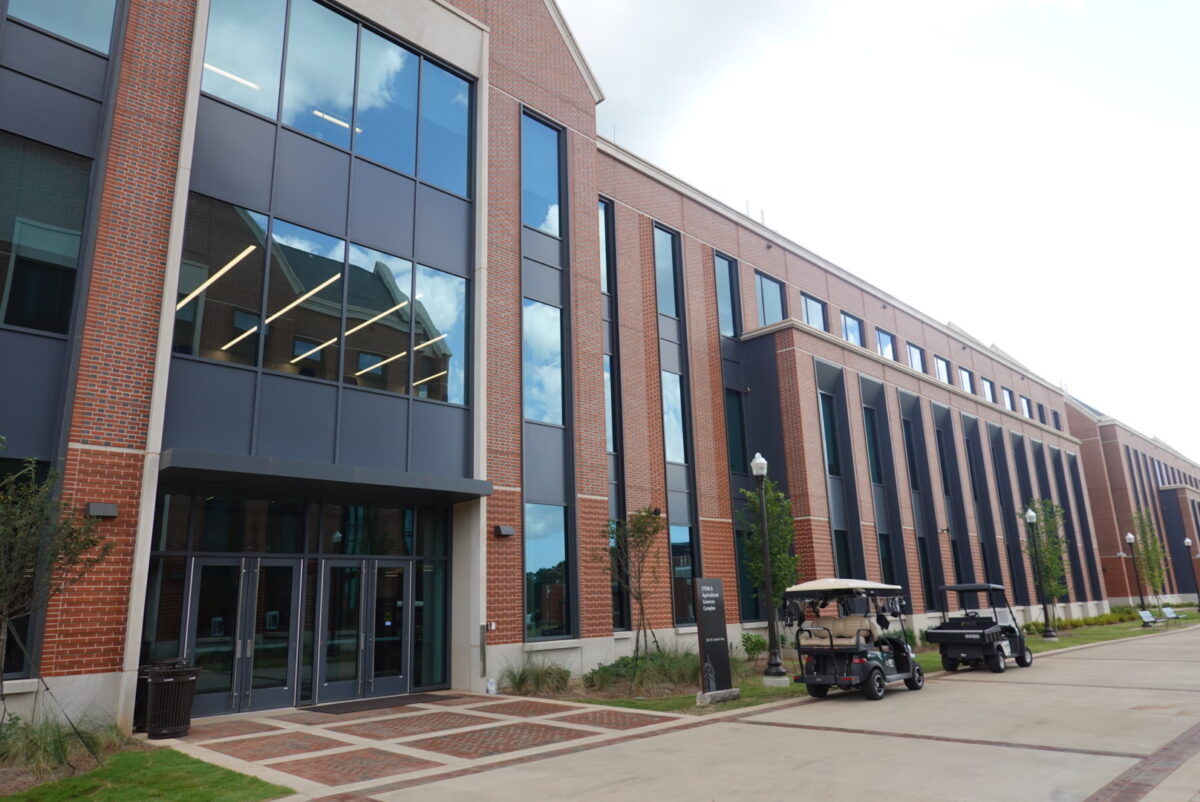
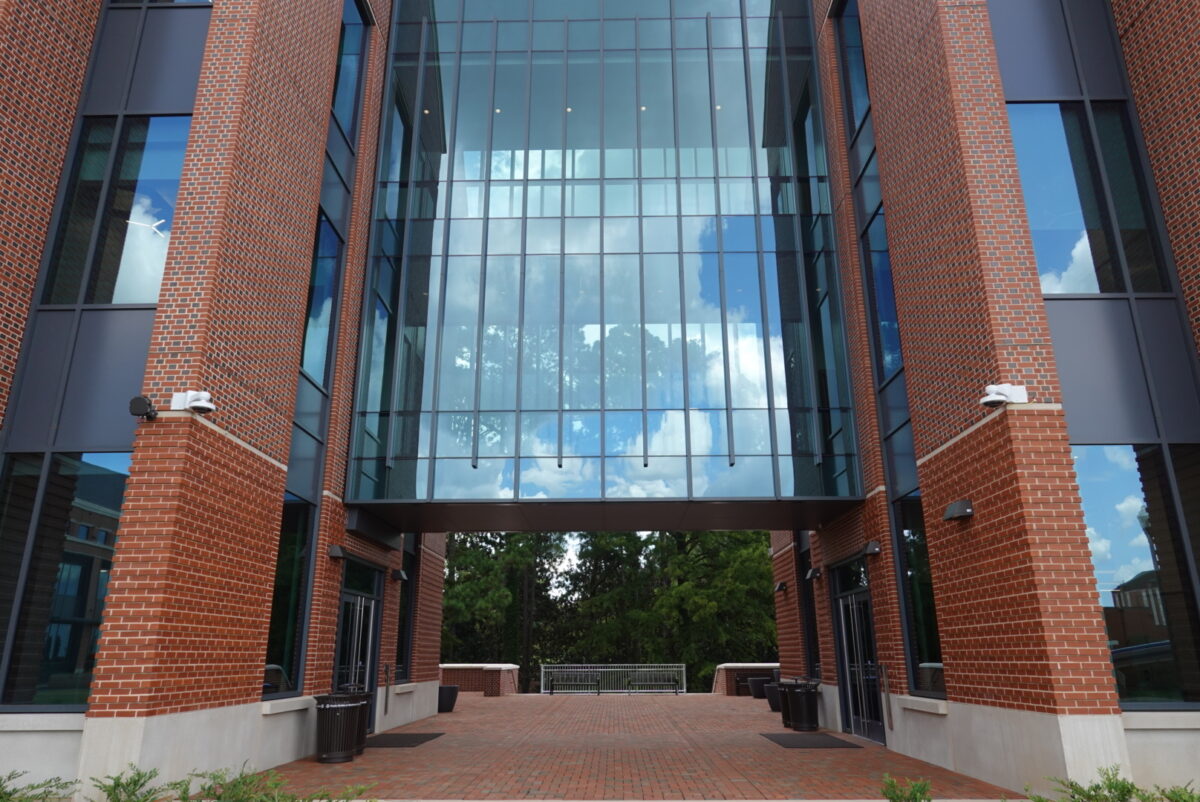
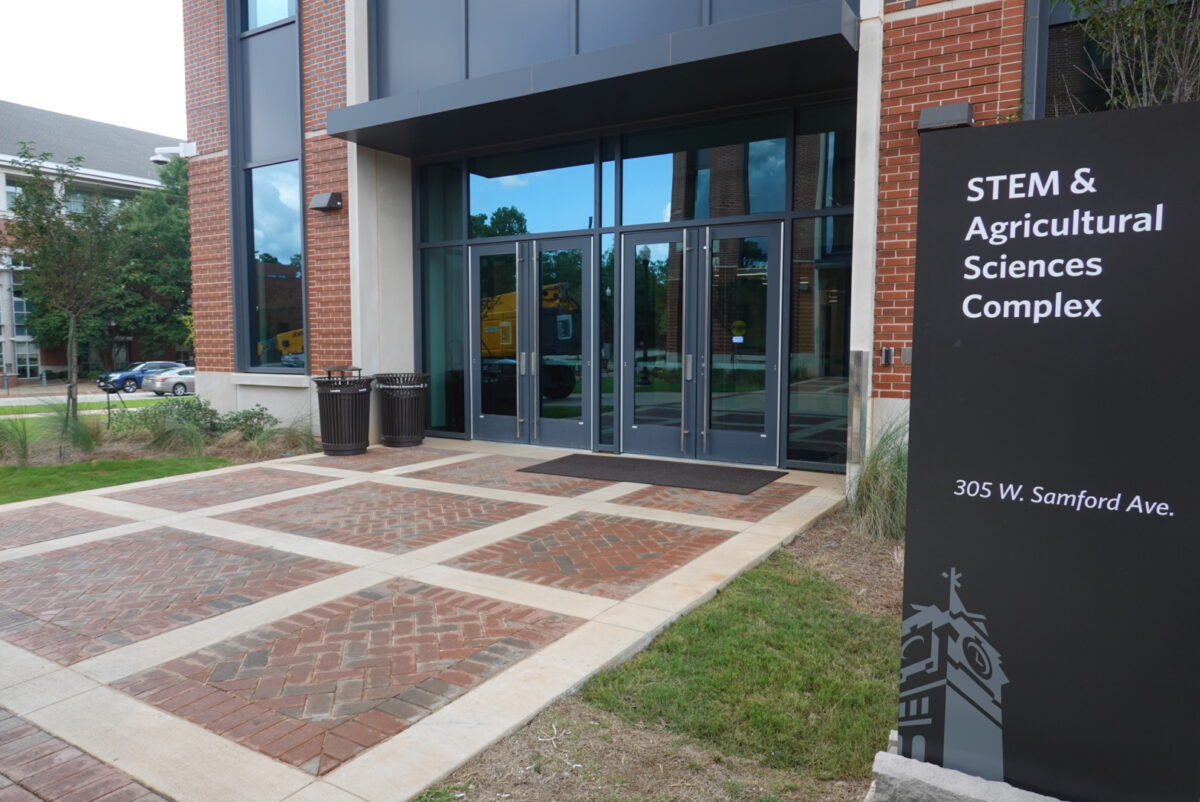
STEM+Ag is located at 305 W. Samford Ave. on Auburn’s campus. (Auburn College of Agriculture)
The STEM+Ag Complex brings together six departments from Auburn’s College of Agriculture and College of Sciences and Mathematics, creating an environment where disciplines that often overlap can work side by side.
For the College of Agriculture, that includes majors like:
- Crop & Soil Sciences
- Environmental Science
- Applied Biotechnology
- Horticulture
- Agricultural Science
The complex also houses Auburn’s Departments of Mathematics and Statistics, Geosciences and Biological Sciences.
That mix is intentional. Agriculture today reaches far beyond the traditional farm, encompassing everything from environmental sustainability and plant health to climate science, biology and data-driven research.
Alabama’s agriculture industry is booming

By bringing these areas together under one roof, Auburn hopes to create more opportunities for students and researchers to innovate together. For a state like Alabama, that’s a big deal.
The state’s food, fiber, forestry and green industries contributed $77.3 billion to Alabama’s economy and supported more than 273,000 jobs, accounting for 10% of the state’s workforce, according to an Auburn-led economic contribution study.
So while the STEM+Ag Complex is located in Auburn, its impact has the potential to reach far beyond campus—including into communities like Birmingham. The students learning in these labs today could become the scientists, researchers, agricultural entrepreneurs and industry leaders shaping Alabama’s workforce tomorrow.
And for students considering a future in agriculture, that means getting an education in an environment built around the science, technology and innovation driving the industry forward.
Preparing Alabama’s next generation of leaders


Rather than viewing agricultural sciences as a single, traditional field, the new complex puts agriculture in conversation with STEM disciplines, creating a more interconnected picture of the industry and its possibilities.
That approach builds on a long-standing connection between agriculture, science and innovation. Today, the STEM+Ag Complex is helping push that work forward, supporting research and technology across areas including agricultural technology, environmental research, food production, biotechnology and new applications for crops.
Roughly 350 faculty, staff and researchers moved into the complex over the summer, with students starting classes there earlier this month.
It’s a glimpse at what agriculture can look like for the next generation—and an investment in the people who will help Alabama’s industry continue to grow, innovate and evolve.
And if you’re a student who wants to be part of that future, there’s plenty of room to find your place. Auburn’s College of Agriculture offers 13 undergraduate majors and 12 minors, with opportunities spanning science, technology, business, communications, environmental studies and more.
See what’s possible in agriculture—and discover where Auburn College of Agriculture can take you.
Sponsored by: