Reviewed by: Cindy Hatcher
How “Auburn University Dogs” use their noses to keep people safe around the world
Reading time: 5 minutes
Sponsored

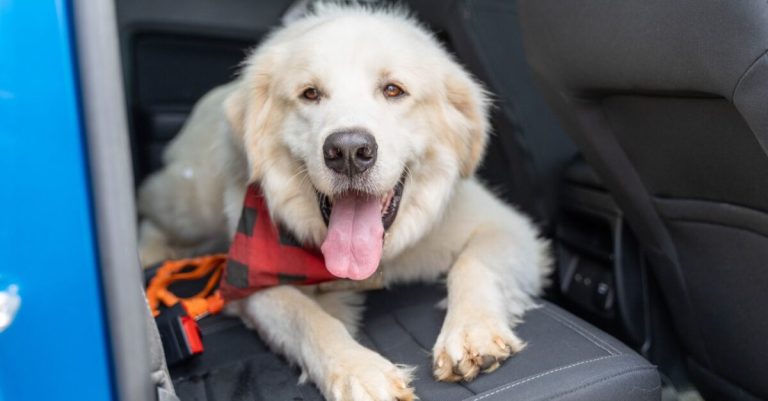
From busy airports to congested stadiums, public safety is often in the hands—or should I say paws—of elite, four-legged detectives that got their start at Auburn University. Known as the Auburn University Dog™, these highly-trained canines are sought after for their sense of smell, mental focus and physical fitness, and used to reinforce safety in public spaces across the globe.
To learn more about these impressive pups, we met with Dr. Paul Waggoner, the Director of Canine Performance Sciences at Auburn University’s College of Veterinary Medicine.
What to know about Auburn Dogs
What is The Auburn University Dog™?

When it comes to detection dogs, there are standard bomb-sniffing dogs…and then there is The Auburn University Dog™.
While traditional detection dogs may inspect specific objects or search designated areas, Auburn Dogs are bred and developed for specialized detection work, including a technique called Vapor Wake®. Patented by Auburn University in 2015, Vapor Wake®-trained canines can detect odors left behind by dangerous chemicals—such as those in firearms and explosives—helping them identify potential threats in crowded, busy environments like airports, stadiums and other public spaces.
What makes an Auburn Dog?

Before there were Auburn Dogs, there was Canine Performance Sciences (CPS). A program of Auburn University’s College of Veterinary Medicine, CPS began in 1990 focused on understanding dogs’ ability to detect explosives. Over time, their work has expanded into breeding, behavioral science, detection technology and partnerships with agencies that put dogs to work in the field.
“We don’t really teach dogs to do anything. We engineer what nature has basically built them to do, and we mold that for our purposes. Our job is to understand what the depths of those capabilities are—and we’ve still got a long way to go.”
Dr. Paul Waggoner, Director, Canine Performance Sciences

What makes an Auburn Dog? According to Dr. Waggoner, it’s more than just having a good nose. Potential candidates are considered based on multiple factors, including their:
- Motivation to search
- Ability to solve problems
- Physical health
- Capacity to stay focused in distracting environments
To put it simply, Auburn Dogs are an entirely different breed (pun intended).
What can Auburn Dogs detect?

While bombs and explosives might be their most well-known application, researchers are just scratching the surface on what Auburn Dogs can detect.
For example, Auburn Dogs have been sent to the Florida Everglades to help researchers locate invasive Burmese pythons that threaten native wildlife. During the training process, CPS researchers discovered that a snake’s diet and stress level could affect its odor, meaning the samples used for training needed to reflect the conditions the dogs would encounter in the wild.
“Obviously, there are all kinds of snake species in the Everglades, so we had to train our dogs specifically on pythons. Not only that, but we had to find a sample python that was not on a captive diet, and was in a relaxed state.”
Dr. Paul Waggoner, Director, Canine Performance Sciences

Closer to home, Auburn Dogs have been hired by Alabama marine law enforcement to find illegally caught fish concealed on boats. In this case, the challenge was training the dogs to find hidden fish, not just every fish they encountered.
“In many cases, the dogs are detecting the same odors, but they learn to ignore what’s out in the open and zero in on the hidden cache. It’s not just about how sensitive their noses are, but how well they can distinguish between different sources of an odor.”
Dr. Paul Waggoner, Director, Canine Performance Sciences
That’s not all—recently, Auburn Dogs have been assigned to help the USDA detect cases of New World Screwworm, an invasive parasitic fly that reemerged in Texas after being eradicated from the United States in 1966.
Learn more about Auburn Dogs and Canine Performance Sciences at Auburn University
From sniffing out explosives to tracking invasive species, Auburn Dogs are the living proof that canines’ sense of smell goes far beyond what most people imagine. And according to Dr. Paul Waggoner, researchers are still discovering new possibilities.
“We probably don’t go but a few months at any time without seeing something that dogs are doing that surprises and amazes us,”
Dr. Paul Waggoner, Director, Canine Performance Sciences
Want to learn more about Auburn’s Canine Performance Sciences program? Visit the College of Veterinary Medicine website to learn more about its research and work with detection dogs.
Sponsored by: