Reviewed by: Cindy Hatcher
Careers with an agriculture degree might surprise you—horses, drones + more
Reading time: 4 minutes
Sponsored

Mention getting an agriculture degree, and many people picture someone working on a farm.
While farming and ranching remain the backbone of Alabama’s agriculture industry, they’re only part of the story. Today, agriculture needs professionals in everything from animal nutrition and research to engineering, business and emerging technologies like drones and precision mapping.
Just ask Auburn University graduates Abigail Dorrill and Louie Harris—although they took very different career paths, both say Auburn’s College of Agriculture helped them discover just how broad (and exciting!) the industry really is in 2026.
Agriculture opens the door to growing industries

For 2023 Auburn graduate Abigail Dorrill, that was certainly the case.
Growing up in a military family with no agricultural background, all she knew was that she loved animals and entered Auburn planning to become a veterinarian. But after meeting with an academic advisor and learning more about the opportunities available through the College of Agriculture, she discovered another path that better fit her passions.
Today, Dorrill works for Purina Animal Nutrition as a Livestock Product Specialist, representing the Alabama Farmers Cooperative system. She travels across Alabama helping producers make informed nutrition decisions for cattle, horses, sheep, goats and other livestock.
“I completely understand why people think agriculture only means farming. But an agriculture degree opens far more doors than most people realize.”
Abigail Dorrill, Livestock Product Specialist, Purina
She points to careers in sales, marketing, finance, communications, research, genetics, animal nutrition, engineering, technology, policy, sustainability and supply chain management—all of which support the agriculture industry.
“The best part about an agriculture degree is its versatility. Whatever your strengths or interests, there’s likely a place for you in agriculture.”
Abigail Dorrill, Livestock Product Specialist, Purina
Technology is transforming Alabama’s agriculture industry
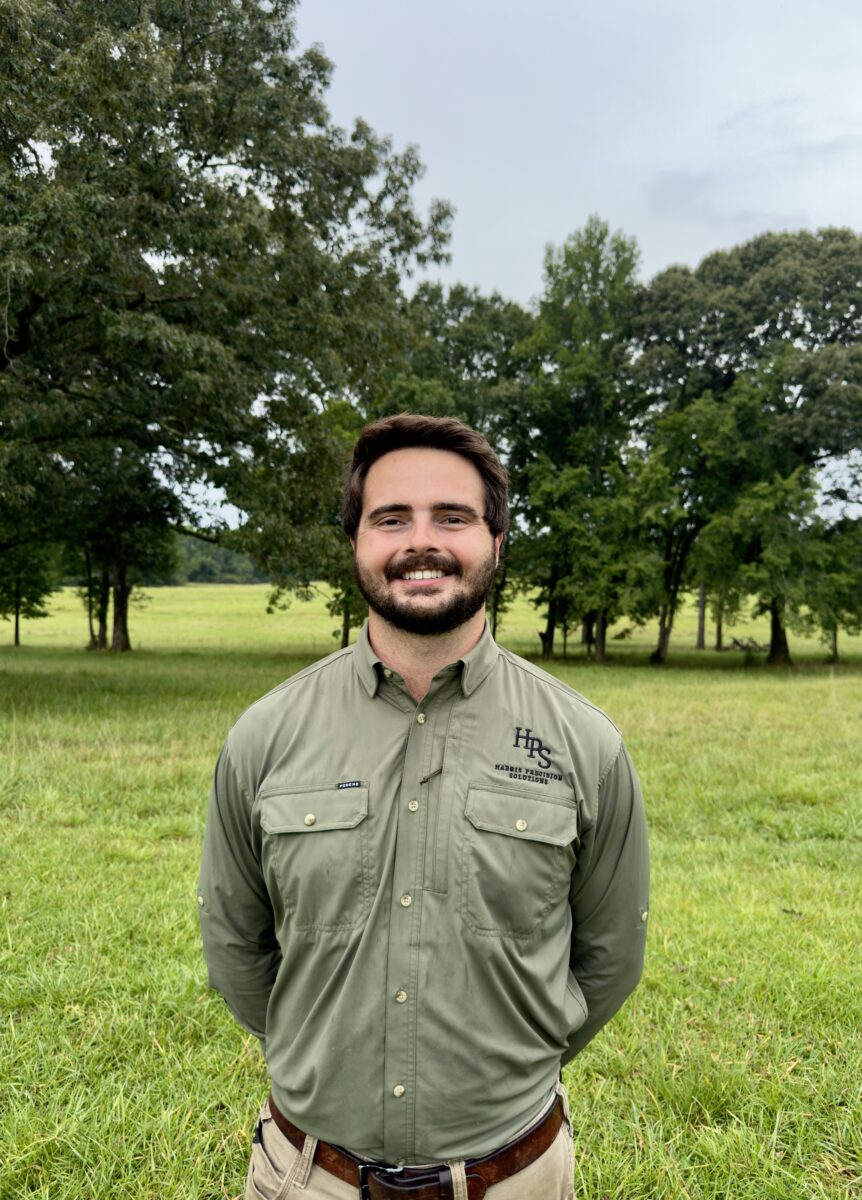

Louie Harris (pictured) and his brother John are the minds behind Harris Precision Solutions. (Harris Precision Solutions)
Agriculture is also becoming increasingly high-tech.
Auburn graduate Louie Harris earned his undergraduate degree in Biological and Agricultural Technology Management with a minor in Entrepreneurship and Family Business before completing a master’s degree in Biosystems Engineering with an emphasis in precision agriculture.
Today, he’s co-owner of Harris Precision Solutions, where he and his brother provide agricultural drone applications, aerial mapping and other precision agriculture services that help farmers and landowners operate more efficiently.
“Auburn showed me that agriculture is one of the fastest-evolving industries because of innovation.”
Louie Harris, Co-founder, Harris Precision Solutions
From drones and GPS guidance to data analysis and precision applications, technology is changing how producers grow crops, manage land and make decisions. His Auburn education gave him both the technical skills and business foundation to launch a company that combines agriculture with cutting-edge technology.
The value of an agriculture major goes far beyond the classroom

Both graduates say some of their most valuable experiences happened outside the lecture hall.
For Dorrill, getting involved with Agriculture Ambassadors helped her build lifelong friendships, strengthen her leadership skills and develop relationships with professors who later became mentors and references.
She encourages current and future students to say yes to opportunities—even if they feel outside their comfort zone.
“Agriculture is an incredibly relationship-driven industry, just like finance or other business fields. The connections you make and the experiences you gain will be just as valuable as what you learn in the classroom.”
Abigail Dorrill, Livestock Product Specialist, Purina
Harris shares a similar perspective.
Before Auburn, he primarily viewed agriculture through the lens of production farming. His college experiences gave him a fresher perspective.
“There are opportunities in engineering, technology, research, business, data analytics, environmental management, and many other areas that all contribute to the success of agriculture.
Building trust, maintaining strong partnerships, and working alongside producers, researchers, and industry professionals are just as important as technical knowledge.”
Louie Harris, Co-founder, Harris Precision Solutions
Considering an agriculture degree? Here’s where it could take you

As global demand for food, fuel and natural resources continues to grow, agriculture remains one of the world’s most essential industries.
Whether you’re interested in animals, plants, technology, business or the environment, there’s likely a path within Auburn’s College of Agriculture that matches your interests:
- Animal Sciences
- Crop, Soil + Environmental Sciences
- Agricultural Business & Economics
- Biosystems Engineering
- Biological + Agricultural Technology Management
- Poultry Science
For students ready to make an impact, Auburn College of Agriculture offers the tools, mentors and opportunities to make it happen.
Sponsored by: